Register or Sign in
Sign in for advanced features
- Stainless Steel Tables
- Stainless Steel Sinks
- Shelving
- Plumbing
- Accessories
- Storage & Transport
- Kitchen Equipment
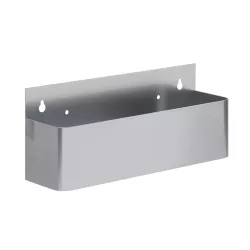
In high-volume bar environments, every second behind the counter counts. The stainless steel speed rails play a direct role in improving service speeds, maintaining hygiene standards, and withstanding constant use.
The speed rails are an integral part of the bar equipment, designed to promote efficient workflow and match the standards required in professional environments.
Enhance Bartending Efficiency with Speed Rails Solutions
A correctly designed speed rail system can improve service speed, ergonomics, and control of pour consistency.
The proper placement of such equipment in bars helps bartenders keep key items within their reach to minimize movement during peak hours.
Moreover, the placement of speed rails behind each station helps create a rhythm during peak order times while maintaining a well-organized work zone.
To help speed up drink preparation during peak times, speed rails for bars can help create a logical sequence of spirits.
With adjacent ice bins and prep surfaces, this layout can improve service consistency.
Commercial Grade Speed Rails: Design and Durability
Professional bars demand equipment designed to function under the stresses of continuous operation. Speed rails for bars are designed to provide long-term value with the strength, stability, and environmental durability required for any high-use environment.
Heavy-gauge steel construction maintains its integrity even under full load conditions to meet the needs of extended hours of operation. In addition, the inherent corrosion resistance helps ensure performance in high-humidity areas where spills are commonplace.
The result is durable construction that facilitates the workflow for bartending efficiency with seamless integration into the overall restaurant equipmentdesign. It also works well with other equipment, such as underbar sinks.
Key Features & Benefits
- Heavy-gauge stainless steel construction for withstanding the rigors of high-use bar settings
- Optimized design for quick access to core pour selection options
- Easy to clean to facilitate easy sanitation and cleaning processes
- Proven performance for withstanding constant use, qualifying these speed rails as a heavy-duty bar equipment solution
- Compact design to facilitate a space-efficient design for high bottle capacity
Operational Value: Load Capacity, Workflow, and Total Cost of Ownership
From an operational value point of view, a speed rail bar system has a high value because it minimizes the fatigue experienced by bartenders due to reduced movement.
These rails are designed to integrate with standard backbar and undercounter designs that include sinks, refrigerators, and storage options.
In comparison to a lower-cost rack, a stainless steel speed rack provides long-term performance and reliability with fewer replacements and lower maintenance costs to promote a lower cost of ownership.
Conclusion
Designed to promote speed, sanitation, and long-term performance, stainless steel speed rails provide a high level of operational value to the high-use environments of a bar.
Explore the options to integrate a smartly created system into a cohesive service station.
ShareSign up to Newsletter... Register now to get updates on promotions & coupon. - Stainless Steel Sinks